
Combining Video Evidence& Telematics to DefeatFalse Accident Claims
The Problem: A Single Fabricated Claim Can Cost Six Figures

Staged collisions, exaggerated injuries, and "he cut me off" allegations disproportionately target commercial trucks. A large vehicle with a corporate name on the door is assumed to have deep pockets, and in the absence of hard evidence, insurers and juries often default to the narrative that favors the plaintiff. The result is inflated settlements, rising premiums, and a nuclear-verdict environment where a single disputed incident can exceed a fleet's entire annual safety budget.
The problem is compounded by how memory and paperwork work. By the time a claim is formally filed, often weeks or months after the incident, the driver's recollection has faded, witnesses have scattered, and the physical scene is long gone. What remains is a contest of assertions, and the party with the more sympathetic story tends to win. Fleets that rely on driver statements alone are fighting on the plaintiff's terms.
The defense against this is no longer testimony or a driver's word. It is a synchronized, time-stamped record of exactly what the truck and its driver were doing in the seconds before, during, and after impact; captured automatically, preserved immutably, and ready to produce on demand.
Two Data Streams, One Story
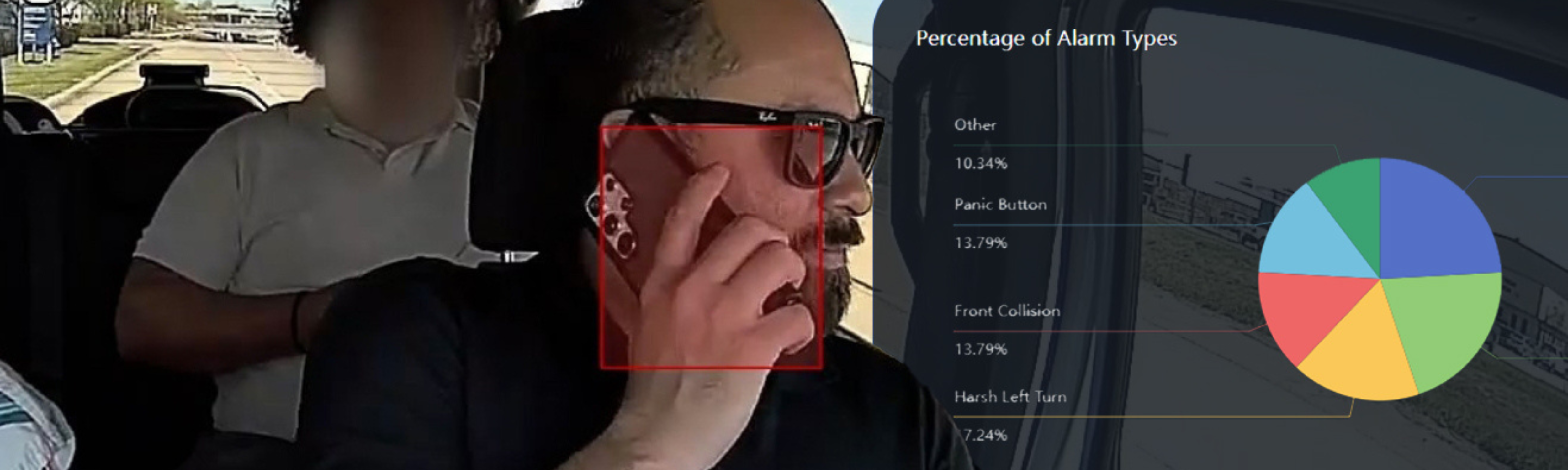
Video and telematics answer different questions. Video shows the external scene and the driver's behavior; telematics quantifies what the vehicle itself was doing. Neither is complete alone: a video without speed data invites the argument that the truck was going faster than it looks, and speed data without video can't show who had right-of-way. Together they close the gaps a plaintiff's attorney would otherwise exploit.
| Data Source | What It Proves |
| Forward & side video | Right-of-way, following distance, signal state, lane position, and the other party's behavior — shown, not argued. |
| In-cab / driver-facing video | Driver attentiveness: eyes on road, hands on wheel, no phone use, no distraction at the moment of the event. |
| Speed & GPS telematics | Exact vehicle speed and location, contradicting "the truck was speeding" claims with recorded fact. |
| Braking & throttle data | Whether and when the driver reacted — hard-brake timing that proves an evasive response. |
| Steering & lane data | Lane-keeping and maneuver evidence that refutes "drifted into me" allegations. |
| G-force / impact sensor | The precise moment and severity of contact, anchoring every other stream to a common timestamp. |
The Key Is Synchronization

The evidentiary power comes from binding both streams to a single, accurate clock. When the impact sensor fires at a given timestamp, that same instant can be located in the video and in the speed, brake, and steering logs. This lets a fleet reconstruct the event as a unified timeline rather than a set of disconnected data points, and a unified timeline is far harder for opposing counsel to pick apart.
Consider how each of the most common false allegations collapses when the two streams are read together:
- • A claimant alleges the truck ran a red light: forward video shows a green signal, GPS confirms the intersection, and speed data shows lawful travel.
- • A claimant alleges the truck rear-ended them: brake and G-force data show the truck was stopped or decelerating and the other vehicle reversed into it.
- • A claimant alleges driver distraction: in-cab video shows both hands on the wheel and eyes forward through the entire sequence.
- • A claimant alleges the truck was speeding: GPS and speed logs show travel at or below the posted limit, timestamped to the moment of impact.
Myth Versus Recorded Reality

The value of combined evidence is easiest to see by pairing the claims fleets hear most often with the data that refutes each one.
| The Allegation | What Video Shows | What Telematics Confirms |
| "The truck cut me off." | Lane position and turn-signal use in the seconds before contact. | Steering angle and lane data showing a controlled, single-lane path. |
| "The truck was speeding." | Traffic flow and surroundings for context. | GPS speed against the posted limit, second by second. |
| "The driver slammed the brakes." | The lead vehicle's behavior that forced the response. | Brake-application timing and the triggering deceleration event. |
| "The driver wasn't paying attention." | Eyes-forward, hands-on-wheel in-cab footage. | Steady throttle and steering consistent with an alert driver. |
Building an Evidence Workflow That Holds Up

Technology only wins claims if the footage survives to reach the adjuster or courtroom. The most sophisticated camera in the world is worthless if the relevant clip was overwritten before anyone retrieved it, or if its authenticity can be questioned in deposition. Fleets that consistently defeat false claims treat evidence as a disciplined process, not a device.
- • Automatic event flagging: harsh-braking and impact triggers mark and protect the relevant clip so it is never overwritten in the recording loop.
- • Rapid retrieval: incidents are pulled and reviewed within hours: while the driver's memory is fresh and, ideally, before a claim is ever filed.
- • Chain of custody: exported evidence is timestamped, access-logged, and unaltered, so its authenticity cannot be challenged and it remains admissible.
- • Proactive submission: fleets that send a synchronized video-and-data packet to the insurer early often end questionable claims before they escalate into litigation.
- • Retention discipline: a defined policy for how long routine and flagged footage is kept ensures evidence still exists when a late-filed claim finally surfaces.
From Defense to Advantage

The same recorded data that defeats a false claim also lowers the odds of a real one. Reviewing flagged events surfaces coaching opportunities before they become collisions, and telematics trends reveal risky patterns, hard braking on a particular route, recurring following-distance issues, that can be corrected proactively. A fleet that captures and reviews this data builds a documented safety culture, which itself becomes evidence of diligence when a claim does reach a courtroom.
Insurers increasingly reward this posture. A fleet that can demonstrate synchronized video-and-telematics coverage, fast evidence retrieval, and a track record of dismissed fraudulent claims is a lower underwriting risk and that translates directly into more favorable premiums over time.
How Safety Vision Can Help
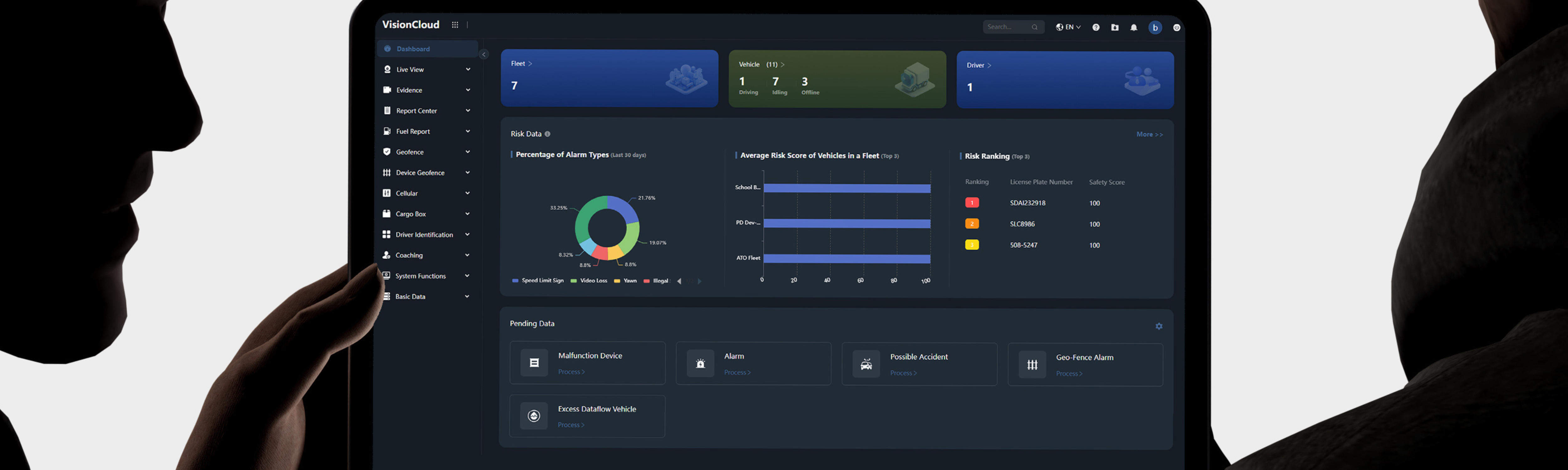
Everything described in this paper depends on one condition: the video and telematics must be captured, synchronized, and retrievable from a single system. VisionCloud is built to be that system, a cloud-hosted enterprise video management, fleet telematics, and intelligence platform that brings live tracking, GPS telematics, live video streaming, centralized event management, video playback, and remote device management together in one dashboard.
Designed for fleets of all sizes, from school transportation and public transit to commercial logistics, VisionCloud helps organizations improve driver safety, reduce liability, and make smarter operational decisions. For a fleet determined to stop paying for accidents it didn't cause, this platform puts synchronized evidence, fast retrieval, and defensible chain of custody within reach on day one.
The Bottom Line

A camera alone shows what happened. Telematics alone shows how the vehicle behaved. Synchronized together, they establish an objective, defensible account of an incident that no rehearsed story can overcome. For fleets facing staged and exaggerated claims, that combined record is the difference between paying a settlement and closing the file. Over a fleet's full claim history, that difference compounds into a decisive competitive advantage.

Discover More

COPYRIGHT © 2026 SAFETY VISION,LLC. ALL RIGHTS RESERVED.
PRIVACY POLICY | TERMS OF USE | ACCESSIBILITY | COOKIE PREFERENCES