
How Visible Safety Tech Builds the Trust That Brings Riders Back
EXECUTIVE SUMMARY
Transit agencies across North America face a defining challenge: riders who left during the pandemic are not coming back at pre-2020 rates, and the primary barrier is not service frequency or fare price, it is whether potential passengers believe they will be safe onboard. In 2025, the importance riders placed on perceiving their transit system as safe increased 21% year-over-year, making safety perception the third most important factor in the decision to ride, behind only reliable wait and travel times.
This is not a problem that schedules and route maps can solve. It is a trust problem. Riders who have alternatives: personal vehicles, rideshare, remote work need visible, tangible evidence that their transit agency is actively watching over them before they will choose to board again.
Onboard cameras with live look-in capability provide that evidence. When a rider boards a bus and sees a monitor displaying the camera’s view and knows that safety personnel can see what they see in real time. The agency is making a public commitment to accountability that no poster, press release, or service improvement can match. This brief examines why visible safety technology is the most credible tool available for rebuilding rider trust and accelerating ridership recovery.
“Riders don’t just need to be safe. They need to feel safe. Onboard cameras with live look-in address both—and that is what brings people back to transit.”
THE TRUST GAP: WHY RIDERS HAVEN’T COME BACK
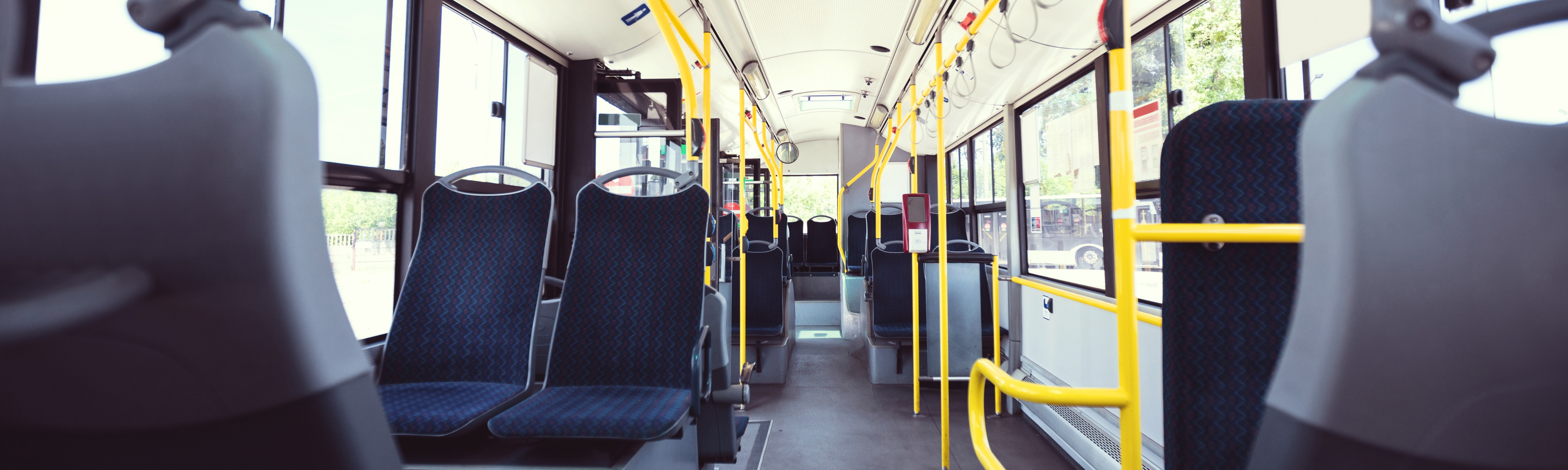
The relationship between safety perception and ridership is not theoretical. It is measurable, well-documented, and increasingly urgent. Transit agencies are confronting a fundamental reality: operational improvements alone do not recover riders if passengers do not feel secure. A system can run on time, offer competitive fares, and expand service hours; and still lose riders to a car because a single unsettling experience on a bus convinced someone the system couldn’t protect them.
87% | 51% | +21% |
of U.S. buses now equipped with security cameras (APTA, 2025) | of agencies say feeling safe & secure is a top rider expectation | YoY increase in rider importance placed on safety perception |
This creates a self-reinforcing cycle. Fewer riders make vehicles feel emptier and less monitored, which makes remaining riders feel less safe, which drives ridership even lower. The agencies breaking this cycle are the ones making safety visible rather than simply making service available.
| Key insight: Transit systems perceived as unsafe experience lower ridership even when they are statistically safe. Visible onboard cameras and live look-in capability break this negative feedback loop by making safety something riders can see, not just something agencies claim. |
WHY VISIBILITY MATTERS MORE THAN STATISTICS
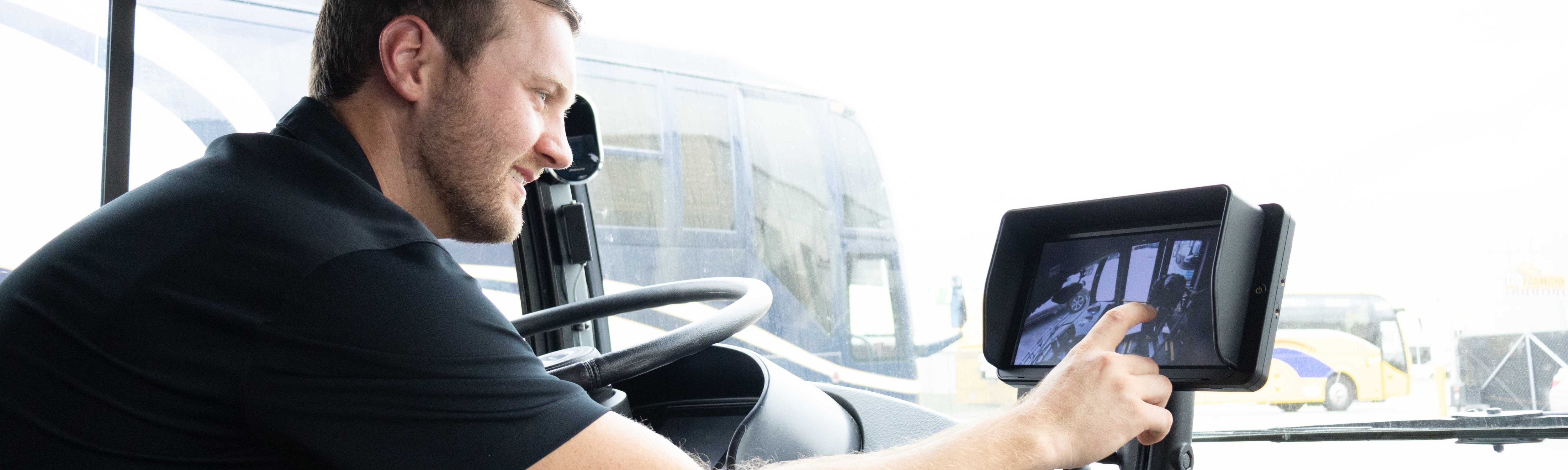
Public transit is statistically one of the safest modes of travel. Automobile occupants face significantly higher injury rates per passenger-kilometer than bus riders. Yet the public perception tells a different story. Enclosed spaces shared with strangers trigger heightened vigilance, and a single negative experience can overshadow thousands of uneventful rides.
This perception gap means that the question transit agencies must answer is not “Are our vehicles safe?” but rather “Can riders see that our vehicles are safe?” The distinction is everything. A bus with a hidden camera in a ceiling dome provides evidence after an incident. A bus with visible cameras and a monitor showing the live feed provides reassurance before anything happens. One is an investigation tool. The other is a trust signal.
- • Deterrence: The visible presence of cameras discourages antisocial behavior, fare evasion, vandalism, and assault before they occur. Research from the University of Groningen confirms that visible cameras paired with onboard display monitors significantly increase passengers’ feeling of security. When riders can see that cameras are active, the environment itself feels managed and accountable.
- • Accountability: High-definition video evidence enables swift investigation and resolution of incidents, ensuring that consequences follow misconduct. This accountability signal reassures regular riders that their agency is not just recording problems but acting on them. Public support for transit cameras has grown from 65% to 73% in recent surveys, reflecting growing rider appetite for this kind of visible commitment.
- • Confidence: Riders who see functioning camera systems and live-feed monitors interpret them as evidence of institutional investment in their wellbeing. The message is not “you are being watched”, it is “someone is watching over you.” That reframing is what converts a surveillance tool into a rider experience asset.
LIVE LOOK-IN: THE CAPABILITY THAT CHANGES THE CONVERSATION
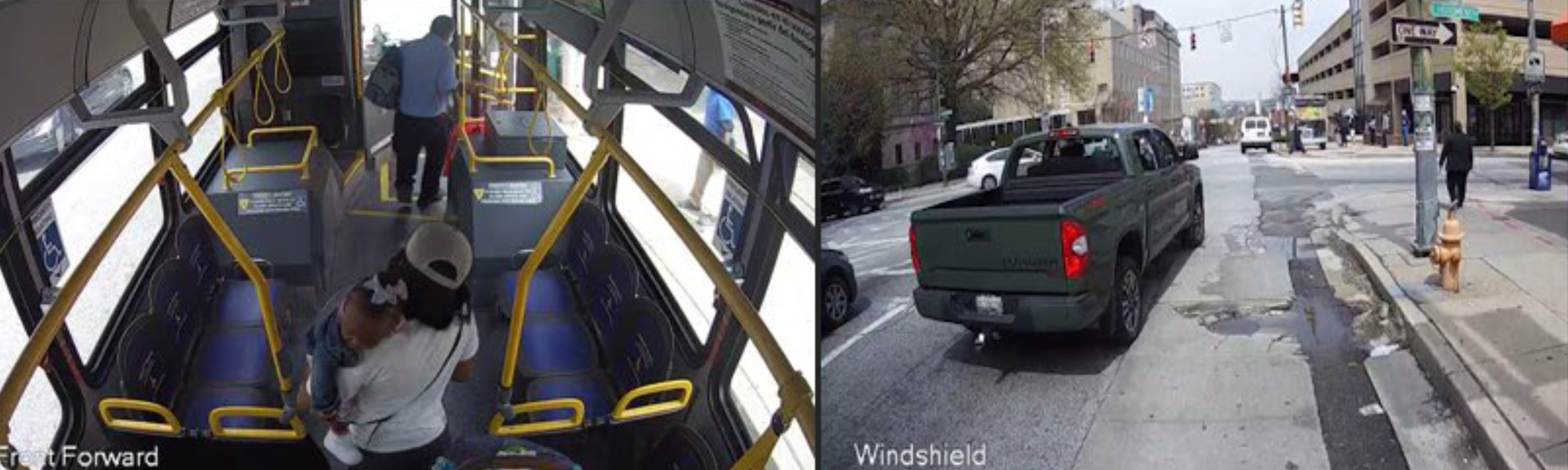
Traditional onboard camera systems record footage for later retrieval. That capability matters for investigations, liability protection, and operator defense, but it does nothing to reassure a rider at 10 PM on a Tuesday that someone is paying attention right now.
Live look-in changes the equation. It gives transit safety teams the ability to view any vehicle’s camera feed in real time, from a centralized operations center or a mobile device. When an operator presses a silent alarm, when a passenger reports a concern, or when AI-powered analytics flag an anomaly, safety personnel can immediately see what is happening onboard and coordinate a response.
From Evidence Collection to Proactive Rider Protection
For riders, the significance is profound. The knowledge that a camera is not just recording but that someone can be watching, and can dispatch help, transforms the onboard experience from passive to protected. Agencies like St. Louis Metro Transit have built real-time camera centers enabling live monitoring across their fleets, transforming video from an after-the-fact tool into an active safety management platform. The highest-performing agencies integrate cameras into every layer of rider protection:
- • AI-powered analytics: Computer vision detects falls, altercations, weapons, and other safety events in real time, triggering alerts that let safety teams respond during an incident rather than investigating after it.
- • Automated passenger counting: 360° counting cameras deliver ridership data and crowd density insights, enabling agencies to deploy security resources where and when riders need them most.
- • Automated enforcement: Camera-based bus lane enforcement has delivered 24% faster travel times, 14% more weekday riders, and 42% fewer collisions on deployed routes. Improvements that directly enhance the rider experience.
- • Operator protection: Video systems deter assaults on operators through visibility and provide critical evidence when incidents occur. The FTA has made operator protection a strategic priority. When operators feel safer, service quality improves; and when service quality improves, riders notice.
A RIDER-TRUST PLAYBOOK FOR TRANSIT AGENCIES
Deploying onboard cameras is a necessary step, but the way an agency communicates and operates its video system determines whether it merely documents incidents or actively rebuilds rider trust. Agencies leading the ridership recovery treat their camera investment as a rider-facing commitment, not a back-office tool.
| 01 Show Riders | Show Riders You’re Watching Over Them Install visible display monitors that show riders the camera feed in real time. Use signage, social media, and press outreach to communicate that cameras are active, monitored, and used to protect riders, not to surveil them. Lead with the message that your agency has made a public commitment to onboard safety. |
| 02 Live Look-In | Make Live Look-In a Public Promise Don’t treat live look-in as an internal operations capability. Tell riders and the public that your safety team can view any vehicle in real time. This single message: “we can see what you see, and we’re ready to help”, is more powerful than any frequency improvement or fare reduction in rebuilding trust. |
| 03 Deploy AI Analytics | Deploy AI to Intervene, Not Just Investigate Invest in AI-powered analytics for real-time incident detection and automated alerts. Build centralized monitoring so safety teams can intervene during events rather than reviewing footage afterward. The rider experience difference between “help arrived in two minutes” and “we reviewed the tape the next day” is the difference between trust and distrust. |
| 04 Protect Operators | Protect Operators to Protect the Rider Experience Position onboard cameras explicitly as operator protection tools. Communicate that footage defends operators against false claims and prosecutes genuine threats. Operator confidence directly correlates with service quality, courtesy, and the interpersonal experience that shapes how riders feel about their system. |
| 05 Share the Data | Give Riders Evidence-Based Reasons to Trust You Track video deployment against ridership on specific routes. Measure incident rates, response times, rider satisfaction, and fare evasion reductions. Share these results publicly. Riders choose systems they trust: give them data, not slogans. |
CONCLUSION
The ridership recovery challenge is, at its core, a trust challenge. Agencies that understand this are investing not just in cameras but in visible, communicable, rider-facing proof that safety is an active commitment, not a passive hope.
Onboard cameras with live look-in capability are the most credible answer available to the question every potential rider asks before boarding: Will I be safe on this bus? They provide deterrence through visibility, accountability through evidence, and confidence through the knowledge that someone is watching over the ride in real time.
The technology is proven. The rider demand is documented. The agencies that will lead the recovery are those that deploy onboard video not as a back-office investigation tool, but as a visible, public commitment to every rider who steps on board.
The technology is proven. The rider demand is documented. The only remaining variable is whether transit leadership chooses to deploy video as a visible commitment to rider safety, not merely as a back-office investigation tool.
ABOUT THIS BRIEF
This brief is part of an ongoing Public Transit Safety thought leadership series examining the intersection of emerging safety technology, rider experience, and operational excellence. It is intended for transit safety directors, general managers, operations executives, and public policy professionals.

Discover More

COPYRIGHT © 2026 SAFETY VISION,LLC. ALL RIGHTS RESERVED.
PRIVACY POLICY | TERMS OF USE | ACCESSIBILITY | COOKIE PREFERENCES