
How AI Video Telematics Is Rewriting the Rules of Driver Engagement
Shortage, Coaching & Retention: How AI Video Telematics Is Rewriting the Rules of Driver Engagement
EXECUTIVE SUMMARY

The commercial trucking industry is facing a convergence of pressures that threaten its operational foundation: a widening driver shortage, accelerating turnover rates, and a recruitment pipeline that cannot keep pace with demand. For years, the industry's default response has been wage increases, yet drivers continue to leave.
The data tells a more nuanced story. Drivers do not quit jobs; they quit environments. They leave fleets where they feel surveilled rather than supported, judged rather than coached, and replaceable rather than valued. The solution, therefore, is not simply economic, it is cultural and technological.
AI-powered video telematics represents a decisive opportunity for forward-thinking fleets. When deployed with a coaching-first philosophy, this technology transforms raw driving data into a continuous professional development engine, one that builds driver confidence, reduces incidents, and gives carriers a measurable recruiting advantage in a shrinking talent pool.
THE CRISIS IN NUMBERS
The driver shortage is not a looming threat, it is an active, compounding crisis. Understanding its scale is the prerequisite for designing solutions that actually work.
80,000+ | >90% | $12,000+ |
Driver shortage in the U.S. (ATA, 2023 estimate) | Average annual turnover rate at select large trucking fleets | Average cost to recruit and onboard a single driver |
These figures represent billions of dollars in lost productivity, wasted recruitment spend, and untapped capacity. Yet they obscure an equally important truth: most drivers who leave a fleet do not leave the industry. They move to a competitor, which means retention, not recruitment, is where the real battle is won.
Key insight: The average fleet loses more revenue to turnover costs than it would spend deploying a full AI telematics platform across its entire vehicle base.
WHY WAGES ALONE WON'T FIX THE PROBLEM

Fleet operators have spent the past decade competing on compensation, signing bonuses, per-mile rate increases, and benefits packages. These measures are necessary but insufficient. Exit interview data from large carriers consistently identifies non-monetary factors as primary drivers of departure:
- • Lack of recognition: Drivers who perform well receive no acknowledgment; drivers who make mistakes hear about it immediately.
- • Perceived surveillance culture: Dashcam and telematics deployments, when poorly communicated, feel punitive rather than supportive.
- • Limited career development: Without clear performance metrics and growth pathways, driving feels like a dead-end role.
- • Inconsistent management: Coaching quality varies wildly across dispatchers and safety managers, creating inequity.
None of these issues are solved by a pay raise. They are solved by a fundamentally different relationship between the fleet and its drivers, one built on trust, transparency, and genuine investment in professional growth.
AI VIDEO TELEMATICS: THE COACHING ENGINE FLEETS NEED
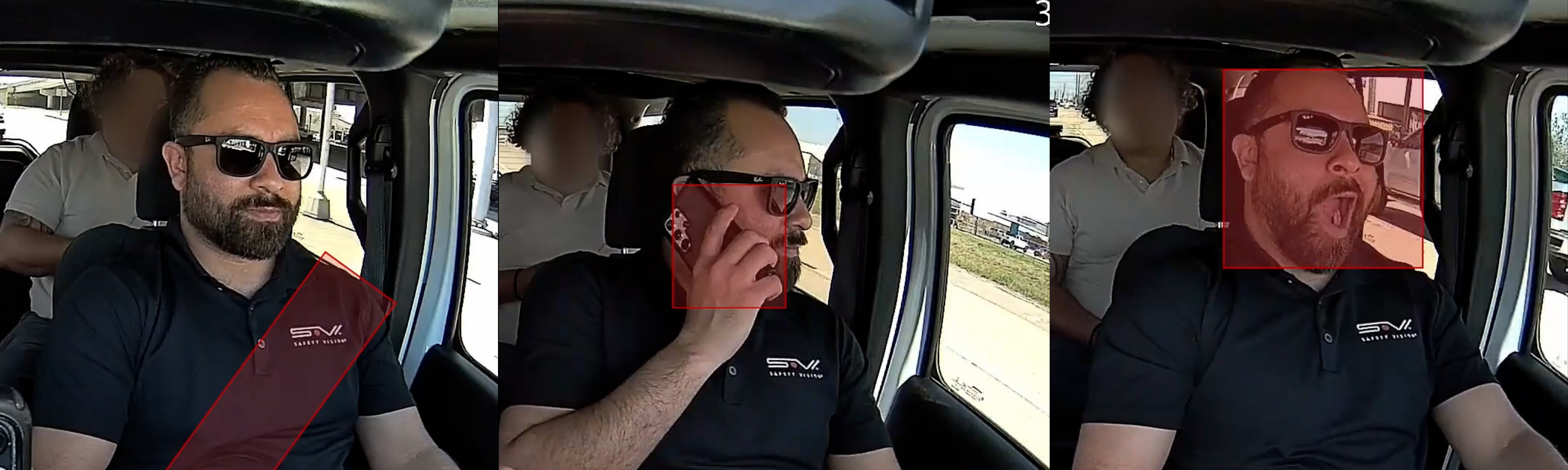
Modern AI video telematics platforms do far more than capture footage of incidents. They apply machine learning to continuous driving data, speed, braking behavior, lane discipline, following distance, distraction detection, and more, to build a rich, objective picture of each driver's performance over time.
The critical differentiator is how this data is used. The highest-performing fleets are using it not as evidence for discipline, but as the raw material for structured professional coaching.
From Surveillance to Partnership
The framing of telematics technology matters enormously. When drivers are introduced to dashcams as safety tools designed to protect them, providing exculpatory evidence in accident disputes, identifying road hazards, and documenting the conditions they work in, acceptance rates increase dramatically. When the same technology is introduced primarily as a monitoring mechanism, resistance and resentment follow.
Fleets that lead with transparency, sharing data with drivers, explaining scoring methodologies, and co-developing improvement plans, report measurably better outcomes on both safety metrics and retention rates.
Data-Driven Coaching in Practice
AI telematics enables a coaching model that was previously impossible at scale: individualized, objective, and consistent. Rather than relying on a manager's observations or a single incident captured on video, coaches work from aggregated behavioral data that paints a complete picture of driving patterns.
Behavioral trend analysis: Identifying whether a driver's hard-braking frequency is increasing over time, suggesting fatigue or distraction, rather than flagging isolated events.
Positive reinforcement: Automatically recognizing and rewarding drivers who demonstrate sustained improvement or consistently safe behaviors across a defined period.
Peer benchmarking: Allowing drivers to understand how their performance compares to fleet averages, creating intrinsic motivation without punitive ranking systems.
Scenario-specific coaching: Targeting coaching interventions to the specific conditions, night driving, highway merges, adverse weather, where individual drivers show the greatest risk.
THE RECRUITING EDGE YOU CAN QUANTIFY

In a labor market where experienced CDL holders are actively evaluating competing offers, the quality of a fleet's safety and coaching culture has become a genuine differentiator. Drivers talk. Word travels quickly about which fleets treat their people well, and which do not.
Fleets that have deployed AI telematics with a coaching-first philosophy are beginning to leverage this in their recruiting materials, and the results are notable:
- • Quantifiable safety culture: Recruiters can point to specific metrics, incident rate reductions, average driver improvement scores, rather than vague promises about a "great team environment."
- • Professional development narrative: Positioning telematics as a career tool, something that builds a driver's verified professional record, resonates with drivers who take pride in their craft.
- • Reduced first-year attrition: Structured onboarding coaching programs, enabled by telematics data, help new drivers build confidence faster and feel supported during the highest-risk period of their tenure.
- • Exculpatory protection: Experienced drivers are acutely aware of litigation risk. A fleet that can demonstrate it will use video footage to defend drivers in disputed incidents is offering something genuinely valuable.
STRATEGIC RECOMMENDATIONS FOR FLEET OPERATORS

Deploying AI video telematics is not a plug-and-play solution. The technology is the enabler; the cultural and operational model built around it is the differentiator. Fleets that get the most from these investments follow a consistent set of principles:
01 | Lead with the Driver Value Proposition Before deploying any hardware, hold driver forums to explain what data will be collected, how it will be used, who has access to it, and, critically, how it will protect drivers. Introduce exculpatory evidence policies explicitly. |
02 | Establish a Coaching Protocol, Not a Disciplinary One Define clear policies stating that telematics data is used primarily for coaching and development. Establish thresholds below which individual events trigger coaching conversations, not disciplinary records. Make this policy written and accessible. |
03 | Build Positive Reinforcement Into the System Design formal recognition programs tied to telematics performance data. Safe driving bonuses, peer recognition, or public performance boards (opt-in) shift the emotional valence of the program from surveillance to achievement. |
04 | Give Drivers Visibility Into Their Own Metrics Driver-facing apps or portals that display personal performance trends, improvement trajectories, and benchmark comparisons convert telematics from something done to drivers to something they actively participate in. |
05 | Track Retention and Satisfaction Alongside Safety KPIs Connect telematics program metrics to workforce outcomes, turnover rates, driver satisfaction scores, time-to-productivity for new hires. Safety ROI is only half the story; talent ROI closes the business case. |
CONCLUSION
The driver shortage is structural, and it will not be solved by any single intervention. But fleets that recognize the connection between operational technology, professional culture, and talent outcomes are already building a durable advantage over those still competing on wages alone.
AI video telematics, deployed with intention and transparency, does something no pay package can: it tells a driver that their employer sees them as a professional worth investing in. In a market defined by scarcity, that message is a competitive weapon.
The fleets that will win the next decade of talent competition are not necessarily those with the deepest pockets. They are the ones building the most compelling answer to a question every driver asks when evaluating an offer: Will this company actually have my back?
The technology is ready. The data is available. The only remaining variable is whether fleet leadership chooses to use it to build trust, or to enforce compliance.
ABOUT THIS BRIEF
This brief is part of an ongoing Commercial Vehicle Safety thought leadership series examining the intersection of emerging technology, workforce strategy, and operational excellence. It is intended for fleet safety directors, operations executives, and risk management professionals.

Discover More

COPYRIGHT © 2026 SAFETY VISION,LLC. ALL RIGHTS RESERVED.
PRIVACY POLICY | TERMS OF USE | ACCESSIBILITY | COOKIE PREFERENCES