
Designing an EffectiveSchool Bus Stop ArmCamera Program
For most transportation directors, the conversation around school bus stop arm enforcement does not begin with policy or vendors. It begins with drivers. Over time, drivers report patterns they are seeing on their routes—vehicles failing to stop, confusion on multi-lane roads, and repeat issues at certain intersections. Those reports create a natural question for district leadership: how significant is the issue in our community, and how should we address it?
To explore what thoughtful implementation of a stop arm camera program looks like in practice, we spoke with Clint Bryer, Vice President of Sales for Student Transportation at Safety Vision, about what he sees districts navigating across the country.
TL;DR: Before launching a school bus stop arm camera program, transportation directors should:
|
Start With Internal Feedback, Then Gather Real Data

Driver input is often the first indicator that stop arm violations are occurring regularly. However, anecdotes alone do not always provide a full picture of scale or frequency.
Bryer believes that the first step should always be clarity. Before committing to a long-term stop arm camera enforcement strategy, districts benefit from gathering objective data in their own environment.
A pilot deployment on a portion of the fleet can provide measurable insight into:
- • How often vehicles illegally pass stopped school buses
- • Where violations are concentrated
- • Whether traffic volume supports a violator-funded stop arm program
In some communities, pilot data may reveal significant violation rates within weeks. In others—particularly in rural or low-traffic districts—the numbers may not justify a full scale stop arm citation program.
The goal is to make an informed decision based on actual district conditions.
Understand the Broader Stakeholder Environment

Stop arm programs rarely involve only the transportation department. Once enforcement and citations enter the discussion, legal teams, law enforcement, local officials, and finance leaders typically become involved in reviewing structure, workflow, and reporting.
In some communities, prior experience with traffic enforcement programs or press coverage influences public perception. In others, legislative limitations determine whether citations can be issued through third-party systems. These factors do not necessarily prevent a program from moving forward, but they do affect how it should be designed and communicated.
Districts that align stakeholders early in the process tend to experience smoother implementation.
Maintain Operational Control and Clear Access Structure
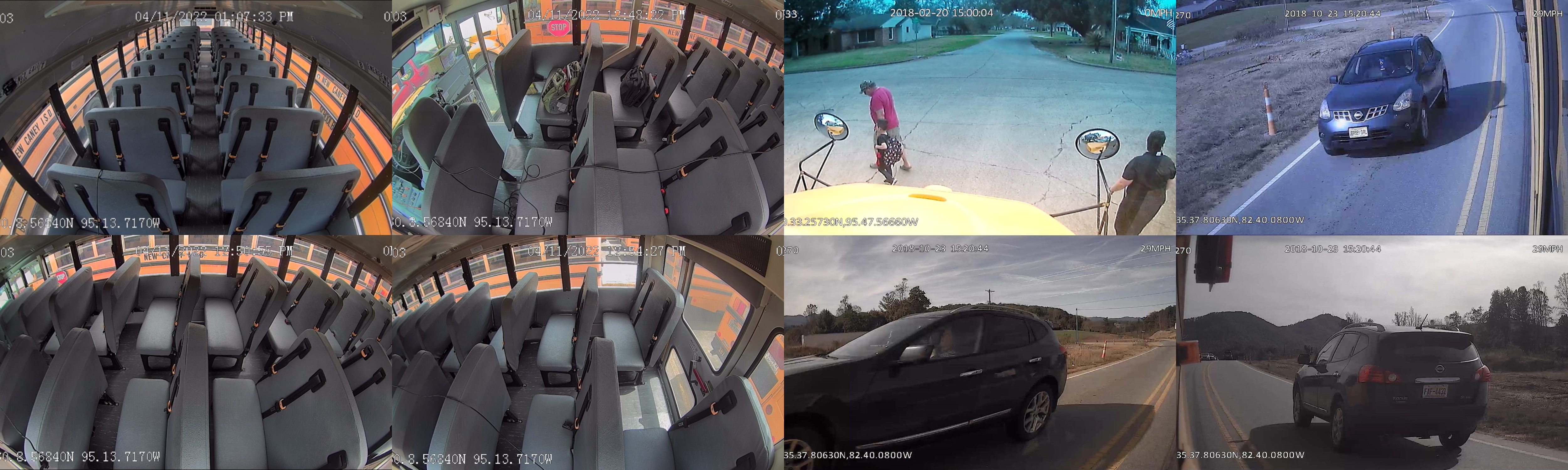
One of the most significant shifts when launching a stop arm program is how video evidence is managed. As Bryer put it, “When you start getting into stop arm ticketing, now you’re talking about evidence. That must be controlled.” Access permissions should be layered and intentional.
Clear decisions must be made regarding who can access stop arm evidence, who can edit or export footage, and how financial reporting related to citations is handled. Separating internal operational footage from citation-related evidence is often necessary to maintain proper chain-of-custody, protect privacy data and reduce legal risk.
Design Around Local Conditions

No two school districts operate under identical road conditions or legislative frameworks. Road design, traffic density, and state-specific laws directly influence how a stop arm camera solution should be structured.
For example:
- • Multi-lane highways may require expanded camera coverage
- • States with rear-only license plates require different capture angles
- • Some states permit AI-assisted violation detection
- • Others require a driver-triggered event marker to satisfy legal standards
Programs tailored to the district’s specific traffic environment and state legislation tend to perform more consistently than one-size-fits-all deployments.
Build Community Awareness Early

Community awareness plays a meaningful role in program acceptance. Districts that implement structured outreach before citations begin often experience fewer misunderstandings.
Communication strategies may include updates on district websites, social media announcements, coordination with local media, and public board discussions. Some districts implement a warning period during the initial phase, issuing notices without fines to increase awareness before full enforcement begins. This approach allows residents to adjust behavior while reinforcing that the program’s purpose is compliance and safety.
Define Success in Practical Terms

Success should be defined before implementation begins.
For many districts, a sustainable violator-funded model requires sufficient violation volume to offset equipment and program costs. Beyond financial sustainability, other indicators of success may include reduced administrative burden, reliable court-admissible evidence, and improved consistency in enforcement.
Violation frequency often declines as awareness increases, and enforcement becomes predictable. However, not every district will see identical outcomes. Traffic patterns, tourism, commuter flow, and local driving culture influence long-term results, so performance should be evaluated within the district’s own context.
Conduct Thorough Due Diligence on Program Partners

Stop arm programs intersect with public trust, legal processes, and financial transparency. As a result, vendor selection should include careful review of track records, litigation history, and prior program outcomes.
Districts should seek clarity around cost structures, revenue sharing models, data ownership, and ongoing support. Long-term partnership stability is particularly important, as these programs typically extend beyond a single budget cycle.
Transportation departments operate within tight operational margins. A stop arm camera provider should understand daily fleet realities and integrate with district workflows rather than introduce unnecessary complexity.
Bryer noted that this alignment begins with transparency and a consultative approach. “We want to work within the district’s parameters and be fully transparent about how the program is structured and funded,” he said. Rather than applying a top-down model, he explained that Safety Vision works directly with transportation departments to review hardware, software, labor, cloud storage, and revenue structures upfront, so there are no surprises after implementation. That level of clarity, he added, helps districts maintain operational control while building a program that fits their specific needs.
A Structured Approach Supports Long-Term Results

For districts evaluating stop arm enforcement, the most effective starting point is a clear assessment of local conditions and internal capacity. From there, decisions can be made methodically and with confidence.
A well-designed program supports transportation leaders in doing what they already prioritize: maintaining reliable operations while reducing unnecessary risk on student routes.

Discover More

COPYRIGHT © 2026 SAFETY VISION,LLC. ALL RIGHTS RESERVED.
PRIVACY POLICY | TERMS OF USE | ACCESSIBILITY | COOKIE PREFERENCES